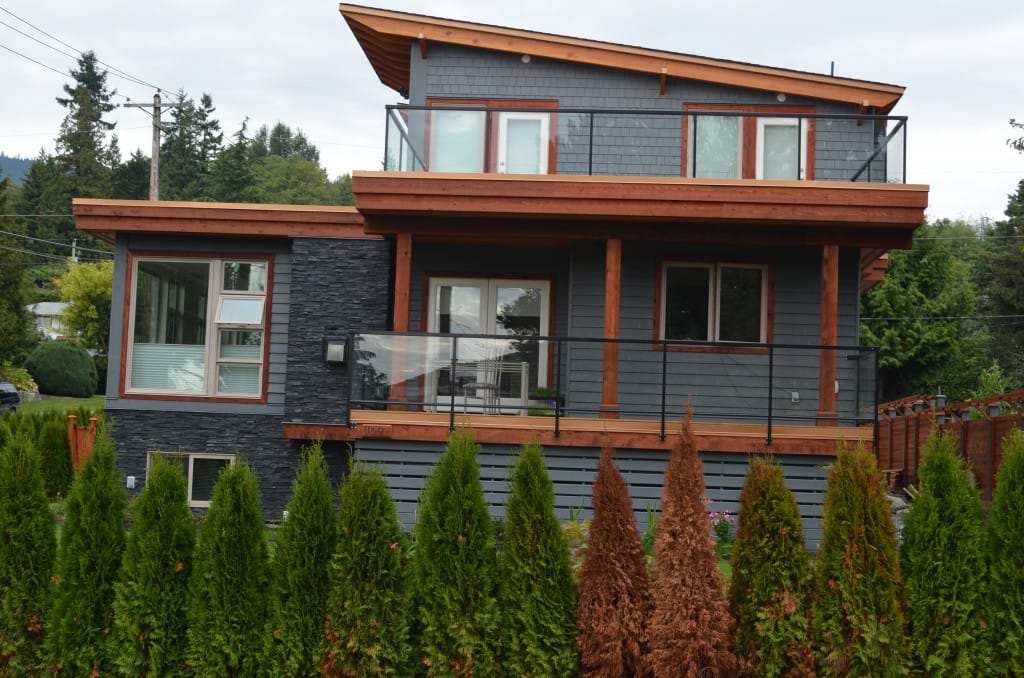

What Is A Passive House?

What Is A Passive House?

What Is A Passive House?

Why and How Can We Build One?

  1. Introduction to a Passive House
  2. Which parties need to be involved in the process?
  3. What incentives can a homeowner receive from municipalities? 
  4. The Passive House design-build process.
  5. Passive House costs
  6. Passive House Certification
  7. Net Zero Homes
  8. Passive House renovations

1- Introduction To Passive House

The Passive House movement started in Germany and is currently spreading all around the world because it offers builders and homeowners a chance to reduce their carbon footprint while saving energy.  

A Passive House is a building constructed to certain standards and details in order to minimize the building’s energy consumption and its dependency on outsourced energies like hydro or gas. The building can be an apartment building, an institutional building, a commercial building or a single-family house. 

There are many programs that lay out standards to construct better and more energy-efficient buildings. These include LEED, Built Green, r2000 and Net Zero. Many use rating systems or standards that rate the material source, construction practices and recycling methods. Some of the standards set by these programs are similar. Generally, a Passive House concentrates specifically on a building’s performance, including airtightness, indoor air quality, thermal bridges and insulation values within the building. 

If a designer and a contractor follow the required standards, the building will ultimately need to show proof of performance during and after construction, which will entail several stages of examination before the building can achieve a Passive House Certification. 

In a nutshell, anyone interested in saving on their energy bill while reducing their carbon footprint can choose to build a Passive House or do a passive home renovation. It might look more costly at the beginning, but the investment pays off in no time. 

2- Parties Who Need To Be Involved In The Process

When a developer or a homeowner decides to build a Passive House, first he or she needs to discuss the options with a home designer/architect who has some familiarity with Passive House. 

West Vancouver custom house builder

In a normal building, the designer/architect can take the lead on the design process and hand the final permit drawing, which includes the structural drawings, to the homeowner/developer to call for tender, but in Passive House there should be coordination between the designer/architect, contractor and city staff and all other consultants from the beginning. 

The following is the list of the parties who are involved: 

1- A Designer who is familiar with the process and knows how to deal with other parties

2- Energy Modeller (Sometimes the Designer can do this part, sometimes not. Some Designers prefer to leave this part to a third party) 

3- Passive House Certifier. This person cannot be the same as the Energy Modeller. 

4- Building Envelope Consultant. In some cases, a Building Envelope Consultant needed to approve the details of the exterior walls.

5- A Structural Engineer who has some knowledge of Passive House and modern framing. It is important to have this knowledge, as the structural elements are a key point in avoiding thermal bridges.

6- Energy Auditor (advisor) to determine the building performance. 

Most municipalities require this stage for new homes. For a Passive House, this stage will be more comprehensive.

In addition, the following consultants are required for any construction, regardless of whether it is a Passive House or not. These include: a Survey engineer, a geotechnical engineer, and a landscape designer.

3- What Incentives Can A Homeowner Receive From Municipalities?

In the City of Vancouver, a standard thirty-three-foot lot has a certain maximum floor area depending on where it is located and the zoning in that area. Many lots are narrow, and by adding the side setbacks to the equation, the remaining width might be too limited. 

In a Passive House the thickness of the exterior walls and roof will be increased due to the amount of insulation required to meet a Passive House standard requirement. The City of Vancouver has established a specific department within the Development Department to deal with these issues and will allow some relaxations to the zoning. The

North Shore municipalities, on the other hand, have their own unique approach and projects need to be discussed on a case-by-case basis, as there are many different requirements.

BC Hydro and Fortis BC have a rebate program for Energy Star appliances and all appliances in a Passive House should be Energy Star. 

Insulation for passive house

4- The Passive House Design-Build Process

There are two stages to consider: 

  • Pre-construction Stage.
  • Construction
    Stage.

A- Pre-construction. 

The idea to build a Passive House could be generated by a well-informed homeowner, developer or builder, or in many cases by a designer/architect. 

Regardless of who starts the conversation, be sure your designer has the required knowledge to be able to design a Passive House.  There are set work frames and standards that must be designed into the Passive Home. Once the client has approved an initial concept, the design will need to move into the modelling stage to make sure it meets the requirements of a Passive House. Coordinations between the designer and municipal staff need to take place, so the modelling design may be tweaked to meet building requirements.

During the concept approval stage, the designer may start conversations with a builder who is familiar with Passive House construction and details. After the building details are discussed and approved, the modelling of the project can be finalized. 

At this point, all construction details need to be discussed, reviewed and perhaps revised by a knowledgeable structural engineer in order to avoid any thermal bridging. 

Finally, the designer and builder need to coordinate construction details, making sure all materials will be available when the construction starts.

B- Construction Stage

After the building permit is issued and the utilities lines are located and the builder is ready to set their work, an initial site meeting between the consultants, contractors and the client is necessary to make sure everyone is on the same page and everyone understands each other’s role and responsibilities. 

In this meeting, the builder can present his or her expected schedule so that each consultant and subcontractor knows their timelines and expected inspections. 

It is a good idea to schedule another meeting after the excavation is done and make a mockup of the wall and roof assembly so each and every trade knows the exact requirements, timeline and details of the project. Assuming everyone knows this can cause many problems down the road.

After the framing is done, the designer or Energy Advisor will inspect the framing to minimize thermal bridging in the framing. If there is an issue, now will be the time to explore alternative solutions.

After the insulation and vapour barrier are installed, the energy advisor will have to do a door blow test to determine the airtightness of the building. If the building is large or has multiple stories, tests can be done in multiple stages.

Any deficiencies have to be taken care of at this stage to make sure the building has the desired airtightness. If desired, the designer can request more testing prior to the drywall installation. 

After the drywall installation, all cabinets, mirrors and other finishings a second air blow test should be performed. 

At this stage, the Passive House Certifier would need the reports and documentation to start the certification process. The designer or the modeller can help facilitate this step. 

The rest of the building inspections related to final occupancy will be the same as any other building. 

Passive house builder

5- Passive House Costs

Even though many people might think building a high-performance house will be very costly, the reality is that it is not. Of course, any higher-quality product requires more upfront investment. But if you think about the house as a long-term investment, the Passive House will ultimately require less maintenance and less energy to operate and will therefore require less money in the long run.

Here are some rough approximations of costs you can expect.

  • Starting from pre-construction, the cost of the designer and
    structural engineer will be fifteen percent over a regular house. 
  • The modelling, inspections, door blow tests, and certification will cost
    minimum of fifteen thousand (check with your designer).
  • During construction, the extra material won’t be a huge cost but the
    trained labour to be able to build it will be more than regular
    construction. 
  • There are savings on the heating and cooling systems. The Hrv unit used in a
    Passive House is more costly than a regular house, but the heating system is way less costly.
  • The windows and exterior doors will be fifteen to twenty percent more. 

Overall, the upfront cost of building a Passive House can be as little as fifteen percent above average construction prices. Think of it like buying an electric car, you pay more up front, but you save on monthly gasoline and maintenance charges.

If someone has a limited budget and wishes to build a Passive House, they can reduce the cost of their home’s finishing budget in order to recoup the cost of building a high-performance Passive House. 

Energy saving homes
Energy saving homes

6- Passive House Certification. Why Certify?

The global certifying body for Passive Houses is located in Germany. But there are several identities in Canada who can do the certification of your house.

The designer/architect should take the lead and gather all the reports and documents to pass to the certifier so they have everything they need to issue the certification. 

Once a building is certified, the owner will receive a plaque to proudly hang on the wall.

The honour of hanging this plaque is almost like showcasing your Olympic gold medal to your friends, family or the public. It’s an honour to show the achievement the developer and the team have accomplished. 

By doing so, the building will be registered on the worldwide directory of Passive Houses. 

Anyone who is thoughtful about:

  • Their investment
  • The environment
  • And the well-being of the building’s occupants will want to consider the advantages of building a Passive House as its high-quality design delivers on all fronts.

7- Net Zero House

A Passive House has three different classes:

  • Standard or Classic,
  • Plus and
  • Premium.

The class of a Passive House gets is determined by the dependency of the building on a power grid. A Premium Passive House will have no dependency on a power grid and will be self-sufficient for all its energy consumption. 

The Premium Passive House is often referred to within the construction industry as a Net Zero building. Not all Net Zero buildings are Passive Houses, as a less efficient building can be Net Zero as well. 

The difference is that the energy production in a non-Passive House building needs to be higher to recover the energy loss of the building. Remember, what makes a Passive House unique is that the overall energy loss in a Passive House is minimized, so the occupants need less energy to keep the building running. If someone wants to have a Net Zero Passive House, the cost of the energy production will be less as well. 

8-Passive House Renovations

It is possible to turn an existing building into a Passive House. A program called EnterPHit exists for retrofit projects and refurbishing components of an existing building.

These renovation projects have to go through the same steps as a new construction, except it is often much more difficult because the existing foundation and wall insulation all have to be upgraded to meet the Passive House standards. In addition, to eliminate the thermal bridging, windows and exterior doors have to be replaced and the building modelling should make sure the building will perform after the final inspection.

If you have questions, please forward them to: Home Designer:

Aryo Falakrou at the following email: info@myhomedesigner.com

For more information on Passive Houses visit: passivehousecanada.com

For a free consult on building a Passive House or a Passive commercial building, please give me a call: Aryo Falakrou at:

604-929-6696