
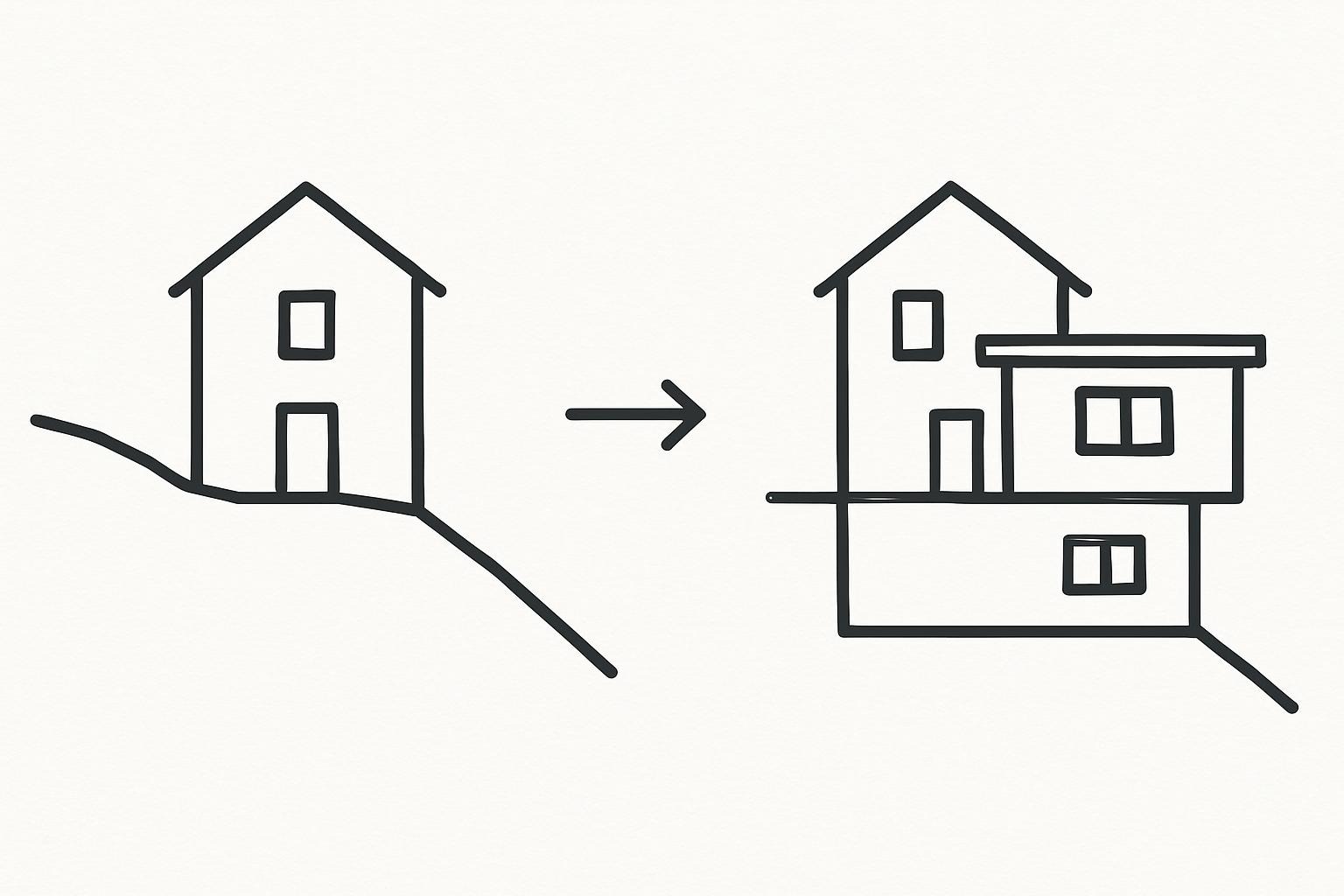
How to Extend a House on a Sloped Lot by Adding a Basement and Main Floor Extension
Extending a house built on a sloped lot poses unique challenges and opportunities. Unlike flat terrain, a sloped lot requires careful planning to maximize space, maintain structural integrity, and enhance the overall aesthetic of your home. Adding a basement and extending the main floor can significantly increase your living space and add value to your property. Here’s a comprehensive guide on how to approach this type of home extension.
1. Assess the Slope and Site Conditions
Before any construction begins, it’s crucial to evaluate the slope’s degree and soil stability. A professional surveyor or structural engineer can help determine:
- The angle and direction of the slope
- Soil composition and drainage patterns
- Potential risks such as erosion or water runoff
Understanding these factors ensures that your extension will be safe, durable, and compliant with local building codes.
2. Design with the Slope in Mind
Sloped lots offer natural opportunities for walk-out basements and multi-level designs. Consider these design elements:
- Walk-out Basement: Utilize the downhill side of the slope to add a basement with direct outdoor access, which can be used as additional living space, a recreational room, or a rental unit.
- Terraced Levels: Design the main floor extension to step with the slope, creating unique room layouts and preserving natural light.
- Retaining Walls: Incorporate retaining walls to manage soil and create level platforms for construction.
Working with an architect/designer experienced in sloped lot designs will help you optimize the use of your land.

3. Obtain Necessary Permits and Approvals
Extending a house on a slope often requires special permits, especially for retaining walls and foundation work. Check with your local building department for:
- Zoning restrictions
- Setback requirements
- Environmental regulations
Securing permits early prevents costly delays or redesigns.
4. Plan the Foundation and Drainage System
A solid foundation is key to supporting your new basement and main floor extension. Options include:
- Step Footings: Footings that follow the slope’s contour, reducing excavation and soil disturbance.
- Deep Foundations: Piles or piers driven into stable soil layers, especially for steep slopes.
Effective drainage is critical to prevent water infiltration and soil movement. Consider:
- French drains around the foundation
- Proper grading to direct water away from the house
- Waterproofing basement walls
5. Choose Construction Materials Wisely
Materials should be chosen for durability and compatibility with the terrain:
- Concrete and masonry for foundations and retaining walls
- Wood framing treated against moisture for the main floor
- Insulation and vapour barriers to enhance energy efficiency and moisture control
Using sustainable or local materials can also reduce environmental impact.
6. Maximize Natural Light and Views
One of the perks of building on a slope is the potential for stunning views. Design your extension to:
- Incorporate large windows on the downhill side
- Use skylights or clerestory windows to bring light to lower levels
- Align rooms to capture scenic vistas
Natural light improves the ambiance and can reduce energy costs.

7. Work with Experienced Professionals
A project of this complexity requires a team including:
- Home designer (some call an architect)
- Structural engineer
- General contractor
- Landscape designer
Their expertise ensures that your home extension is safe, beautiful, and adds long-term value.
Conclusion
Extending a house on a sloped lot to include a basement and main floor expansion is a rewarding way to increase your living space while embracing the natural landscape. With careful planning, professional guidance, and thoughtful design, you can transform your home into a functional and attractive space that meets your family’s needs for years to come.
Do you want to start and need assistance with the process? We have a roadmap that can help you. Just click the link below: